
Why do integration projects fail? Budget, human resources, technology, regulatory issues and timing all impact a project. These are all details that have to be considered. However, I want to ask you to take a step back. If you get mired down in the details too soon, your projects will flail about aimlessly. There are three actions that you can take to lay a solid foundation and ensure project success.
First, create a strategy. It is easy to fall into a rhythm and become complacent when you have performed a task multiple times, however, that does not mean you should always do the same thing. I am not saying to attack it blindly. Use a standard approach, but be willing to adapt to a new scenario and integrate new knowledge. The tools you use should be able to adapt as well. It may take a hammer, but there are numerous types of hammers, from jack hammers to finishing hammers.
Secondly, ask yourself, do you really understand the current state process? Identify every known input, and then consider the others you might encounter. Unexpected changes at the entry point create the most down stream issues. This is the one aspect you cannot control when it comes to integration. This requires a team of people from across the organization who know and understand the business.
In understanding current state, you should define a way to capture the changes required to accommodate the scenario. These scenarios are not about the detailed mapping, just yet, but more about identifying and tracking the mapping requirements. Defining the expected output also hastens approval and sign off. This is the step that gets many projects off track. Critical details and dependencies that are unaccounted for in your project’s infrastructure will expand the timetable to complete significantly and cost your company more dollars. Put processes and definitions in place at the on set to keep it from veering off course.
Finally, establish a strategic integration roadmap. If what you are building is not adding to or laying a foundation for future expansion, then you are wasting money and time. The next time you bring on a trading partner, your integration platform should provide easy on ramping and allow you to plug and play features as needed. If you understand the current state, it should be easy enough to then build out proactive alerts and notifications. It should also allow you to trap those scenarios we did not expect. This allows us to manage by exception and focus resources on resolving issues in a practical manner, before they occur in the first place.
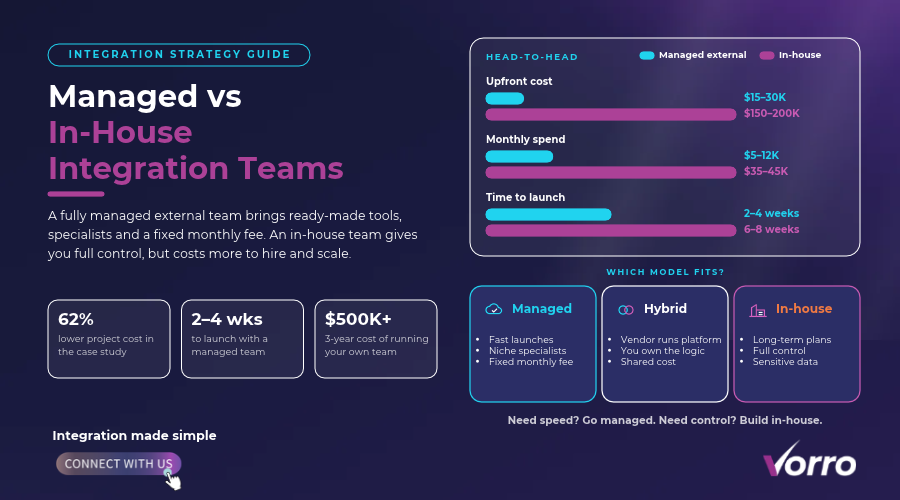
Vorro’s managed services solution brings a clearer visibility to these and many other facets of your business. It will allow you to be proactive with your organizations valuable data assets and offers the ability to measure and gain valuable insight for future decision making. Get the capabilities, insight, and understanding you need to take your business to the next level. Be proactive with your data.
We believe the Vorro BridgeGate platform facilitates the opportunity for an organization to build a strategic integration roadmap. We have done it for many organizations in the US and abroad. Take advantage of the opportunity today and start building for the future. Contact our data integration specialist at Vorro.
Billy Waldrop is the Chief Operations Officer for Vorro, Inc. Billy has dedicated his career to managing and developing complex systems for the manufacturing and healthcare industries. He spent 10 years at the Mayo Clinic, where he supervised and directed teams responsible for the development and support of critical Patient Financial Services systems. He holds an MBA and a B.S. in Professional Management, along with many certifications from the Mayo Clinic.

Related Articles