Fully Managed External Integration Teams vs In House: Which Is Right for Your Business?
Introduction – why integration team models matter
Every time you stitch together a CRM, an ERP, and a marketing automation platform, you’re betting on the people behind the code. Fully managed External Integration Teams vs In House isn’t just a budget line item – it shapes how fast you move, how secure your data stays, and whether you can scale without breaking a sweat.
Think about it: a missed invoice sync can cost you $12,000 a month. A delayed checkout integration could slap a 3?day dip on revenue. The right team model can turn those headaches into a smooth, predictable rhythm.
What Is a Fully Managed External Integration Team?
Core services offered
External providers typically bundle everything from architecture design to ongoing monitoring. You get:
- Requirement gathering and workflow mapping
- API development, middleware setup, and data transformation
- 24/7 support and incident response
- Compliance audits and security hardening
In short, they become the “one?stop shop” for integration, handling both the technical grunt work and the strategic alignment.
Typical pricing models
Most vendors charge a mix of:
- Fixed?fee onboarding – $15K?$30K for the first 30?day sprint
- Monthly retainers – $5K?$12K per month, covering up to 200 hrs of work
- Usage?based add?ons – $0.10 per transaction after a threshold
That predictability can be a lifesaver when you’re budgeting for a $250K digital transformation.
In?House Integration Teams – Overview
Staffing and skill requirements
Building your own squad means hiring:
- Integration architects (2?3 years avg. salary $130K)
- Developers fluent in REST, SOAP, and GraphQL ($110K?$150K)
- QA engineers and DevOps specialists (combined $200K annually)
- A security lead (often $150K+)
Besides the raw salaries, you’ll need time for onboarding, certifications, and continuous upskilling.
Ongoing operational costs
Beyond payroll, consider:
- Tool licenses – MuleSoft, Dell Boomi, or SnapLogic can run $20K?$50K per year
- Infrastructure – cloud compute, monitoring dashboards, backup storage (roughly $10K?$25K annually)
- Office space, benefits, and HR overhead (about 30% of salary)
All told, a mid?sized in?house team can easily tip $500K in total cost of ownership over three years.
Head to Head Comparison Factors
Cost & Predictability
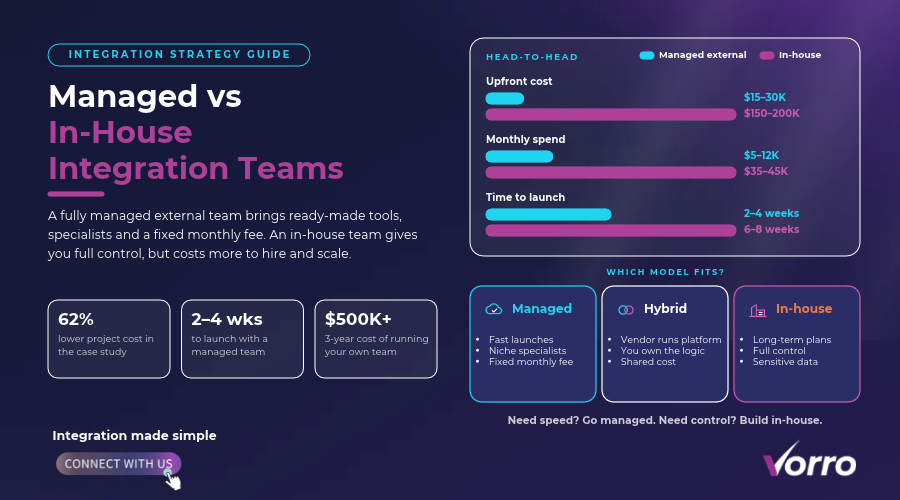
| Factor | Fully Managed External | In?House |
|---|---|---|
| Initial outlay | $15K?$30K | $150K?$200K (hiring + onboarding) |
| Monthly spend | $5K?$12K | $35K?$45K (salaries + tools) |
| Predictability | High – fixed retainers | Medium – variable overtime |
Numbers speak louder than hype. If you crave a clear line?item each month, the external route wins.
Speed to Market & Deployment
External teams live on “ready?to?deploy” frameworks. They can spin up a new integration in 2?4 weeks. In?house squads often need 6?8 weeks just to get the right resources aligned.
And if you’re chasing a market window, those extra weeks could mean millions of missed opportunity.
Access to Specialized Expertise
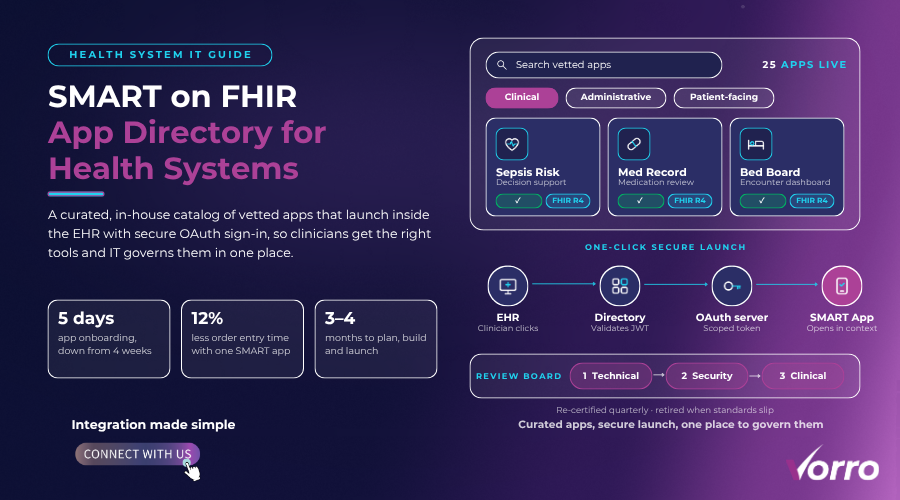
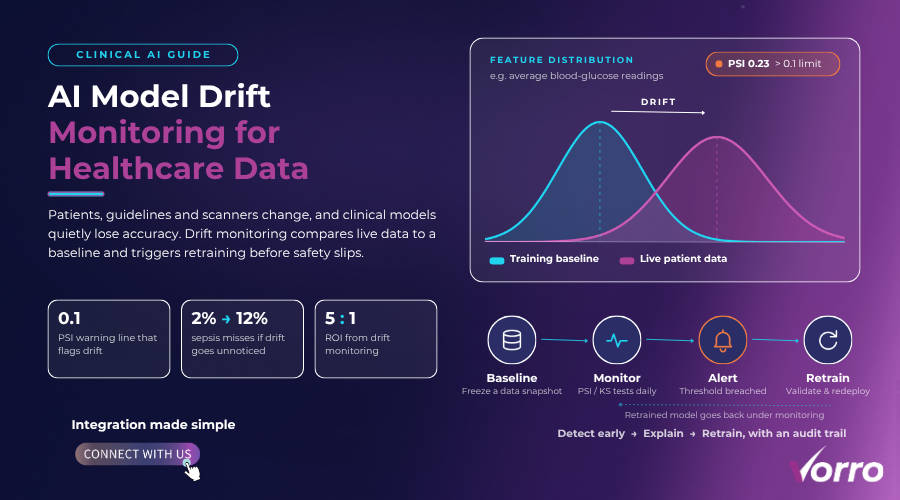
Think of niche stacks—SAP S/4HANA, Snowflake, or the latest event?driven architectures—and even health?system solutions such as the SMART on FHIR app directory. Vendors keep a bench of specialists who’ve tackled those exact combos 10+ times.
Control & Governance
In?house gives you iron?clad governance. You set every policy, every release gate.
External teams hand you a governance model, but you still rely on their processes. It’s a trade?off between direct control and managed oversight.
Security & Compliance
Vendors often hold certifications – ISO 27001, SOC?2, GDPR ready. They’ve built security “by design” into their pipelines.
That said, you still need to vet their data handling practices. If you’re in highly regulated finance, you might prefer the tighter leash of an in?house security lead.
Scalability & Flexibility
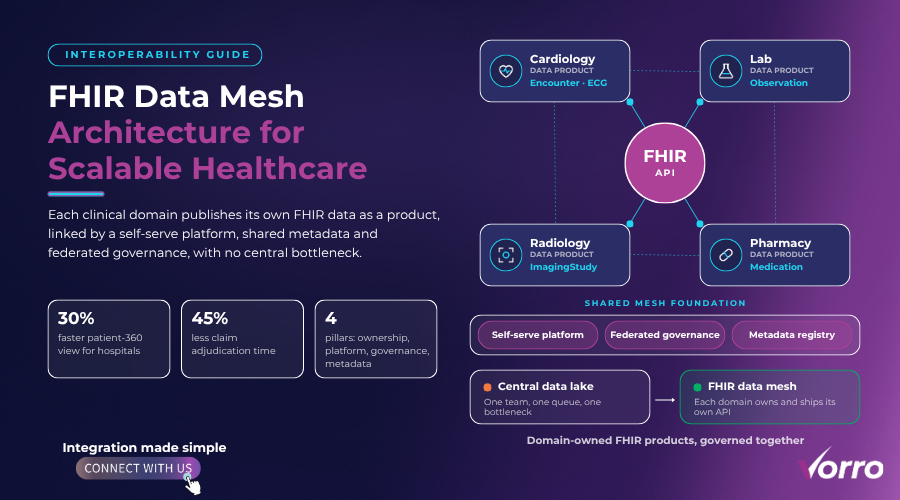
When you need to double transaction volume overnight, an external partner can allocate extra engineers in minutes, much like a FHIR data mesh architecture enables rapid scaling of healthcare data pipelines. Your own team might need weeks to hire or over?time.
But scaling faster also means paying for that elasticity, which can creep up if you don’t cap usage.
When to Choose a Fully Managed External Team
Rapid growth or short term projects
Start?ups that just raised a Series?A often need to integrate a payment gateway and a CRM within 30 days. Hiring a full team would drain cash reserves, while a managed partner can deliver on a predictable budget.
Limited internal talent pool
If your current engineers are already booked on product features, outsourcing the integration work frees them to focus on core revenue drivers. You avoid the “jack?of?all?trades” trap and keep talent happy.
When an In House Team Makes Sense
Long term strategic integration
Legacy system migrations that stretch over 18?24 months usually demand deep institutional knowledge. An internal team can embed with business units, understand legacy data quirks, and evolve the integration roadmap alongside product strategy.
Deep organizational knowledge needed
When your integration touches sensitive HR data or proprietary algorithms, having direct control over every line of code can ease compliance audits and reduce risk exposure.
Hybrid / Co-Managed Models – The Best of Both Worlds
Shared responsibilities
Many firms split the load: the external partner handles the heavy?lifting of middleware and security hardening, while your in?house crew owns business logic and change management. It’s like having a co?pilot.
Cost-Share scenarios
You could contract a vendor for a fixed “core platform” fee of $8K/month and supplement it with your team’s $20K?$25K internal spend. The result? A balanced budget and reduced risk of skill gaps.
ROI Measurement Framework
Calculating total cost of ownership
Start with the obvious:
- Salary & benefits (or vendor retainers)
- Tool licenses & cloud spend
- Training & certification costs
- Hidden costs – onboarding time, turnover, and downtime
Then add the upside:
- Revenue acceleration (e.g., $1.2M additional sales from faster checkout)
- Error reduction savings (average $8,000 per incident avoided)
- Operational efficiency – fewer manual data entries saves ~1,200 hours a year.
Plug those numbers into a simple ROI formula: (Net Gain ÷ Total Investment) × 100. If you see a 42% return in the first 12 months, you’ve got a solid business case.
Measuring time to value
Track milestones:
- Kick?off to first live integration – days
- First revenue impact – weeks
- Full stabilization – months
Dashboard these metrics quarterly, and you’ll see whether the model you chose truly delivers the promised speed.
Vendor Selection Checklist
Evaluation criteria
- Proven experience in your tech stack (look for at least 3 similar projects)
- Transparent pricing – fixed vs usage?based breakdown
- Security certifications and audit reports
- Support SLA – 99.9% uptime, 1?hour critical response
- Reference customers willing to share outcomes
Red flag questions
- Do they own the IP for custom connectors?
- How do they handle data residency requirements?
- What’s the escalation path if a release fails?
- Can they provide a sandbox environment for proof?of?concept?
Ask these early, and you’ll avoid surprise invoices or compliance headaches later.
Real?World Case Study: X Corp’s Migration to a Managed Integration Partner
Challenge
X Corp, a mid?size e?commerce retailer, needed to replace a legacy order?management system with a cloud?native platform. Their internal team was maxed out on a product launch, and the migration risked a $3M revenue dip.
Solution
They signed a 12?month contract with a fully managed external integration partner. The vendor delivered:
- Data mapping and migration scripts in 3 weeks
- Real?time API bridge for inventory sync within 45 days
- Compliance audit and SOC?2 certification for the new pipeline
Results
Within 6 months, X Corp saw:
- 15% faster order processing – saving $750K annually
- Zero integration?related downtime post?go?live
- Total project cost $210K vs the $560K internal estimate – a 62% reduction
That ROI story illustrates why many firms now tilt toward a managed team for high?stakes migrations.
Frequently Asked Questions
Common concerns and quick answers
- Will I lose control over my data? Not if you enforce strict data?handling clauses and insist on transparent audit logs.
- Can I transition back to an in?house model later? Most contracts include knowledge?transfer phases, making a later switch smoother.
- What if the vendor’s rates increase? Negotiate caps or tiered pricing at the start; many providers honor a fixed rate for the contract term.
- Is a hybrid model more complex? It adds coordination overhead, but clear RACI matrices keep things tidy.
Making the Right Decision
There’s no one?size?fits?all answer. If you need speed, predictability, and niche expertise, a fully managed external integration team is often the smartest play. If you’re safeguarding long?term strategic assets and have the talent pool, building an in?house squad gives you the control you crave.
And for many, the sweet spot lies in a hybrid approach – blending external agility with internal insight. Whatever you pick, use the ROI framework and vendor checklist to keep the decision data?driven, not gut?driven.
Bottom line: map your business goals, weigh the cost tables, and ask the right red?flag questions. Then you’ll know exactly which side of the “Fully managed External Integration Teams vs In House” debate you should be on.
Frequently Asked Questions
What are the main cost differences between hiring a fully managed external integration team and maintaining an in?house team?
External teams typically charge predictable subscription or project?based fees, covering staff, tools and support, while in?house teams incur ongoing salaries, training, software licenses and infrastructure costs that can fluctuate with scale.
How does the speed of implementation compare between external and internal integration teams?
A fully managed external team can often deliver faster because they bring pre?built connectors and seasoned experts, whereas an in?house team may need time to recruit, train and develop solutions from scratch.
What security considerations should I evaluate when choosing an external integration provider?
Verify the provider’s certifications (e.g., ISO?27001, SOC?2), data encryption standards, access controls, and whether they support on?premise or private?cloud deployments that meet your compliance requirements.
Can an external integration team scale with my business as needs change?
Yes, most external providers offer flexible staffing and modular services that can be ramped up or down quickly, whereas scaling an internal team requires additional hiring, onboarding and potentially new tooling.
When is it more advantageous to build an in?house integration team instead of outsourcing?
If you need deep control over proprietary processes, have strict data residency rules, or plan to develop long?term, strategic integration capabilities that become a core competency, an in?house team may be the better fit.