
S
ssirdevanMarch 18, 2019

There are all kinds of patient data being collected in healthcare. Such data is gathered around the clock directly or indirectly, and in all care and wellness settings. Effective data integration in healthcare ensures that this data is used efficiently to enhance patient care and streamline operations.

Providers, vendors, and payors, in acute and post-acute settings, are collecting clinical, financial, and social data about patients that is accumulating at a very fast pace. The volume of healthcare data, including those being collected via wearable devices, are measured in the hundreds of exabytes.

Such data represent a challenge as well as a treasure to technologist and to care providers if it were possible to present it meaningfully and therefore being able to deploy it to improve the health and the well beings of millions of healthcare consumers.

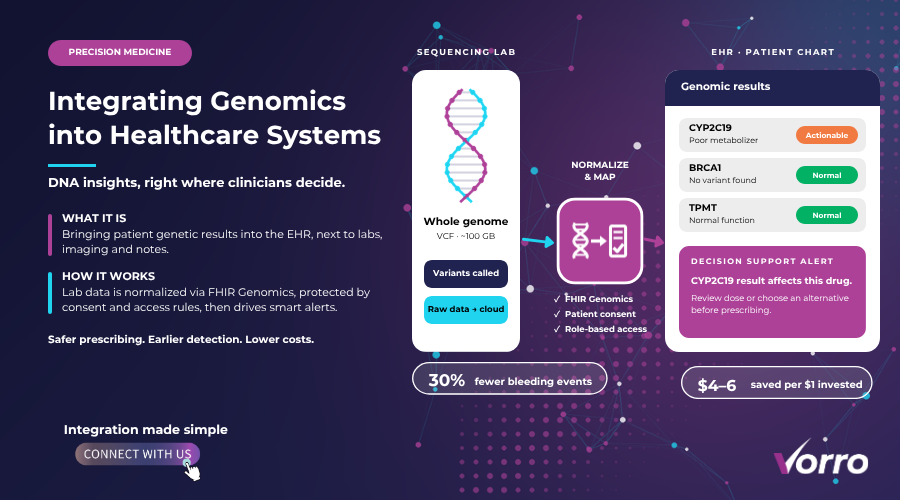
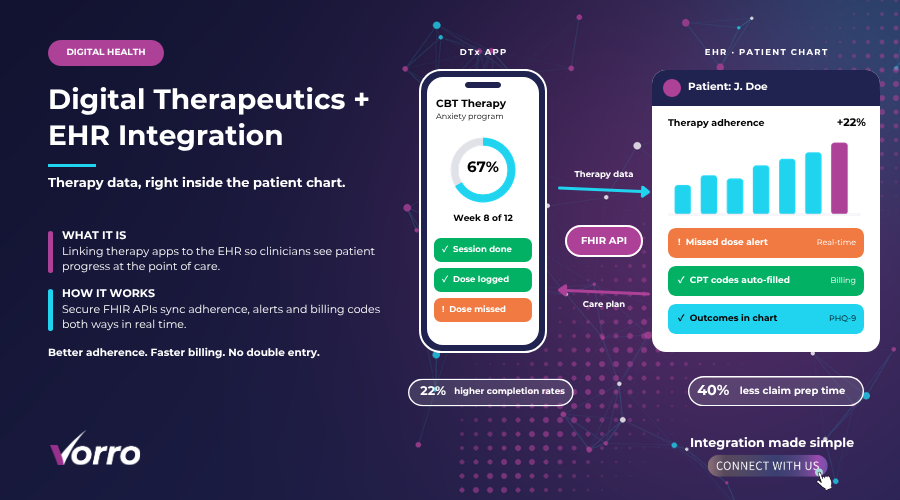
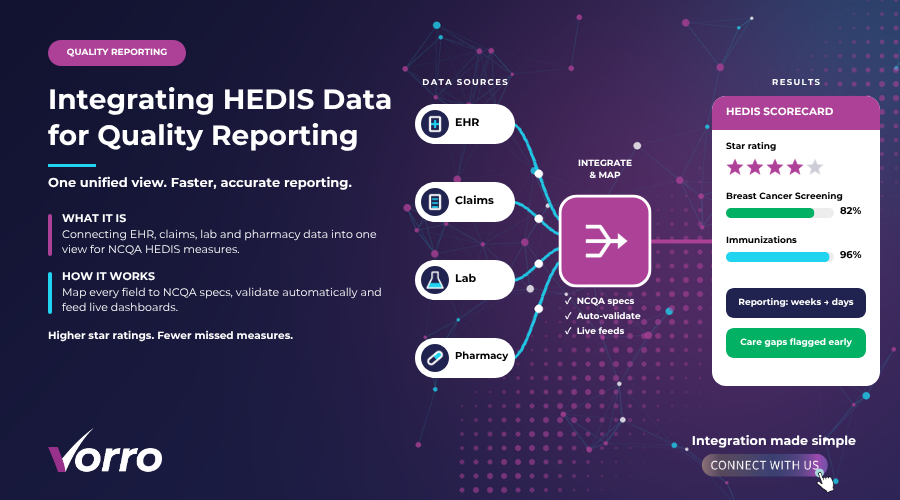
The gateway challenge to using the data to support patient care and wellness is that such data is collected using disparate systems and multiple standards that renders it un-usable without complex and expensive integration and manipulation.

What if, you are able to integrate and transform all this data in a meaningful way?

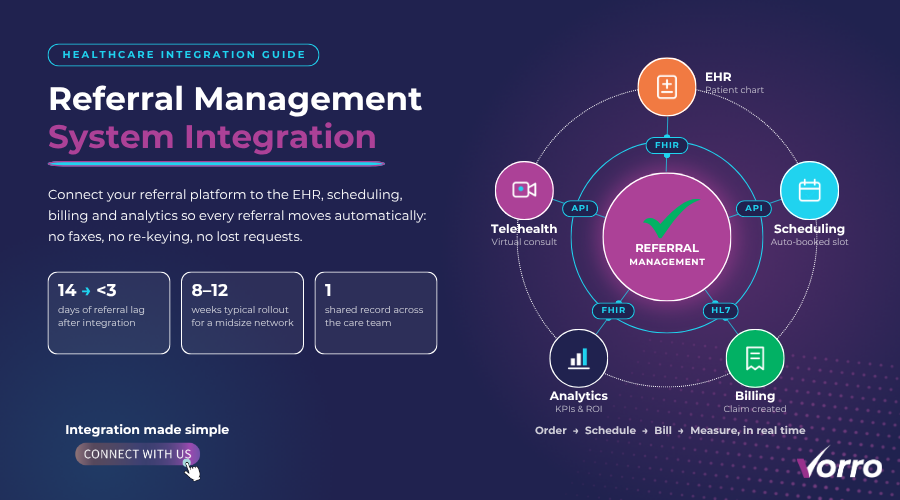
Vorro provides a robust, flexible and easy to use integration platform. We quickly connect and integrate disparate applications and technologies with providers, payors and other healthcare stakeholders. Our interoperability platform works behind the scenes to make your integration projects as well as data transformation needs easy.

Our any-to-any and many-to-many data platform solves the puzzle of data integration and transformation. We provide you with templates, standard configurations, workflows, real time monitoring to make any integration a success.

Other Useful Resources
healthcare data interoperability
enterprise integration platform as a service

Data IntegrationHealthcare IT
ssirdevan
ssirdevanHealthcare Data Experts

Related Articles

EMR Integration Platform: How to Choose the Right Solution for Seamless Healthcare Data Flow
Blogs
EMR Integration Platform: How to Choose the Right Solution for Seamless Healthcare Data Flow
September 11, 2026
Scalable EHR Integration Solutions: A Complete Guide for Healthcare Enterprises
Blogs
Scalable EHR Integration Solutions: A Complete Guide for Healthcare Enterprises
September 10, 2026
Digital Health Integration: A Startup’s Guide to EHR Adoption
Blogs
Digital Health Integration: A Startup’s Guide to EHR Adoption
September 9, 2026
HL7 vs FHIR: Key Differences, Benefits, and Choosing the Right Standard in 2026
Blogs
HL7 vs FHIR: Key Differences, Benefits, and Choosing the Right Standard in 2026
September 8, 2026
AI-Powered Healthcare Data Platform: Boosting Clinical Insight & Operational Efficiency
Blogs
AI-Powered Healthcare Data Platform: Boosting Clinical Insight & Operational Efficiency
September 7, 2026
Data Pipeline: Architecture, Types, Tools & Real-World Examples
Blogs
Data Pipeline: Architecture, Types, Tools & Real-World Examples
September 2, 2026
AI Governance: Principles, Frameworks & Best Practices
Blogs
AI Governance: Principles, Frameworks & Best Practices
September 1, 2026
Data Governance Framework: Implementation & Best Practices
Blogs
Data Governance Framework: Implementation & Best Practices
August 31, 2026
Healthcare Data Integration Tools: Choosing the Right Platform
Blogs
Healthcare Data Integration Tools: Choosing the Right Platform
August 27, 2026
Healthcare Data Architecture: Governance & Scalable Platform Design
Blogs
Healthcare Data Architecture: Governance & Scalable Platform Design
August 26, 2026
Healthcare Data Pipeline Architecture: Secure & Interoperable ETL
Blogs
Healthcare Data Pipeline Architecture: Secure & Interoperable ETL
August 25, 2026
Real-Time Patient Data Analytics: Architecture & Best Practices
Blogs
Real-Time Patient Data Analytics: Architecture & Best Practices
August 24, 2026