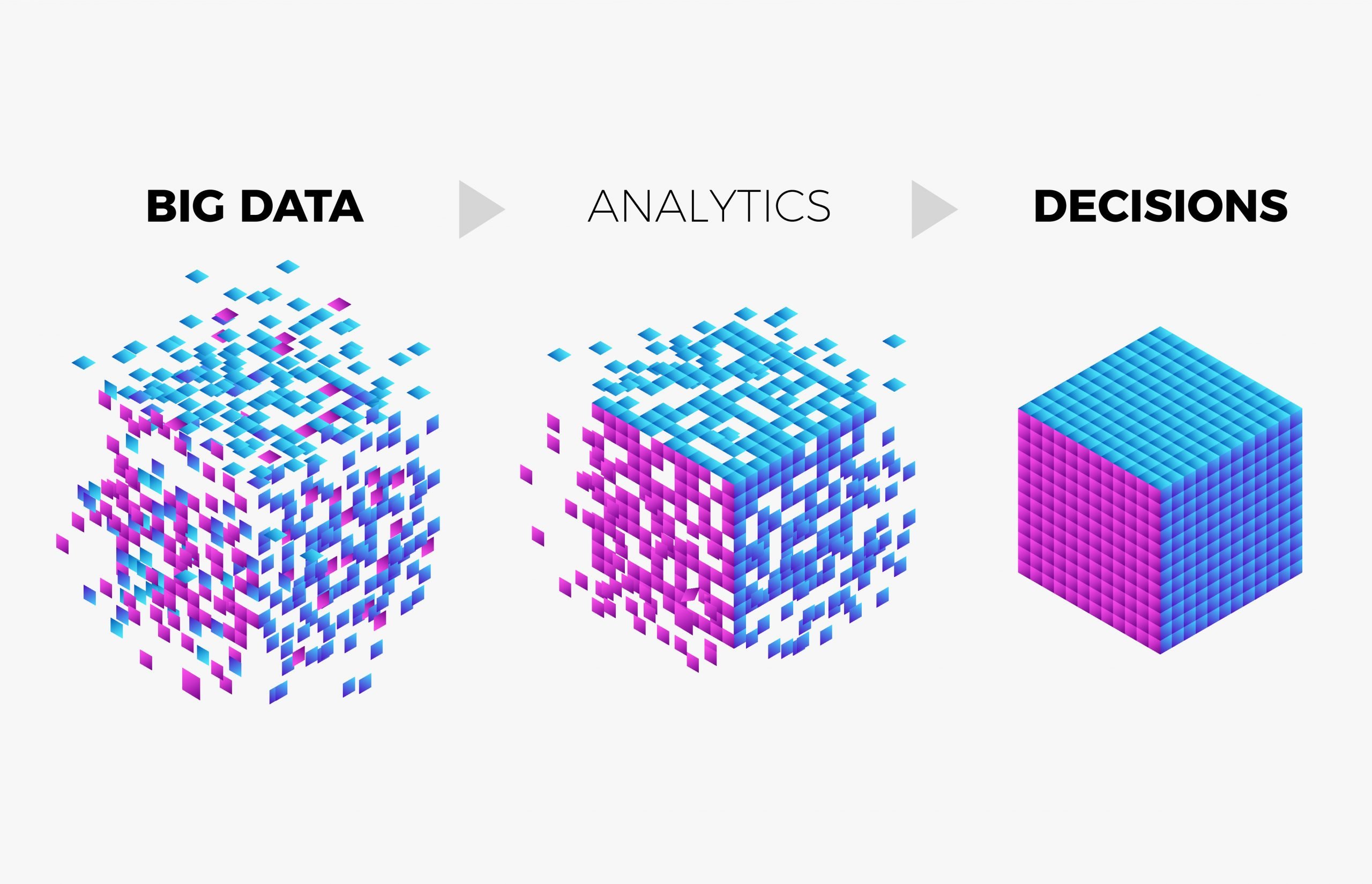
Every transaction, interaction, and communication between a business and its customers leads to one thing: data. Businesses will often collect this data and store it without knowing what it can be used for. Some companies may even choose to ignore this data, completely unaware of all of the benefits that it can provide. Surviving without data in today’s world is increasingly challenging, as data is crucial for driving decisions and optimizing operations.
Analyzing data can help businesses discover the patterns and correlations hidden within, and choosing not to capitalize on the information that can be extracted from data, this puts your business at a severe disadvantage when compared to others who have learned to harness the power of data.
Do you truly know what your customers want?
Your business depends on its customers to be successful. If you are unaware of what your customers want, it is likely that you’ll begin to offer them things that they aren’t interested in. By ignoring the customer’s needs, they will turn to your competitors.
Examining data trends allows you to observe your customer’s shopping patterns – the more data you have collected, the better. By observing these patterns and trends, it is easy for your business to create a plan to retain your customers, creating customer loyalty between them and your business. By understanding the insights you have gained from data, you will have a better idea of what your customers want and need and how your business can help them fulfill these.
What do your customers expect from you?
Has your business run a marketing campaign that turned out to be questionable? This is likely because you were not able to use your data as a research tool. Data analysis is important for marketing because it helps you better understand what kind of advertising is effective with your target demographic. By observing your customers’ online activity and transactions and being able to use that data to predict upcoming trends, your business will have enough information to create an effective targeted marketing campaign.
By analyzing data, your company can focus on targeting the right clients with the right products instead of using a shot-in-the-dark marketing campaign.
Do you know how to prevent losses?
Analyzing data can help your business with risk management. Using your data to predict potential risks and diminish their effects before they happen is an invaluable tool, no matter what type of business environment.
Your data can help you understand why these risks are occurring and stop them in their tracks before they damage your company.
Are you on the same playing field as your competition?
Without effectively analyzing and understanding your company’s data, you are remarkably disadvantaged against the competition. Your competitors use data to offer the right products and marketing campaigns to customers and mitigate risk to their profits. Therefore, you should not ignore this valuable information as it leaves you in the dark. In this day and age, most profitable businesses are taking advantage of the amazing potential data analysis has to offer. So, if your business chooses not to do so, your competitors may leave you in the dust.
Vorro offers data integration services that ensure your business isn’t only on a level playing field but running towards home.
At Vorro, we provide a framework for companies looking to automate data transfer and utilization within their company. Our data modeling and processing techniques help streamline activities within your company. Does the current environment have you looking for ways to improve, scale or increase current productivity and processes? Take advantage now and start building for the future. Speak with the data integration specialist at Vorro. #IntegrateNow
Other Useful Resources
Healthcare data interoperability
EMR / EHR Integrations platform as a service