
Healthcare organizations rely heavily on accurate and actionable data to deliver quality patient care. Yet, data quality issues-such as inconsistencies, duplication, and errors-continue to plague the industry. A key solution to these challenges lies in semantic interoperability, which ensures that healthcare data is shared, understood, and interpreted consistently across systems.
Let’s dive into semantic interoperability, why it’s a game-changer, and how it can solve healthcare data quality issues while enhancing clinical data exchange.
What Is Semantic Interoperability?
Semantic interoperability goes beyond merely exchanging data between systems. It ensures that the meaning of the data remains consistent and actionable, regardless of where or how it’s accessed. This is achieved by adhering to healthcare data standards, such as HL7 FHIR (Fast Healthcare Interoperability Resources), SNOMED CT, and LOINC, which define how data should be structured, coded, and interpreted.
The Cost of Poor Data Quality in Healthcare
The consequences of poor data quality in healthcare are staggering. According to a study by IBM Watson Health, data integrity issues cost the U.S. healthcare system an estimated $3.1 trillion annually. These issues lead to medical errors, redundant tests, billing inaccuracies, and inefficiencies, all impacting patient outcomes and operational costs.
A 2019 survey by Sage Growth Partners revealed that 56% of healthcare executives identified data quality as their top challenge for achieving interoperability. This highlights the urgent need for solutions like semantic inter operability to address these issues.
How Semantic Interoperability Solves Data Quality Issues
- Standardizing Healthcare Data
Semantic interoperability relies on healthcare data standards, which provide a common framework for representing clinical concepts. Standards like ICD-10 for diagnoses, LOINC for lab results, and SNOMED CT for medical terminology ensure that data is consistently coded and understood across systems.
By implementing these standards, healthcare organizations can reduce discrepancies and improve the accuracy of shared information. For example, standardized lab result codes prevent confusion when exchanging data between hospitals and reference labs, ensuring that critical information like glucose levels or cholesterol readings is interpreted correctly.
- Improving Clinical Data Exchange
Effective clinical data exchange ensures that data retains its meaning as it moves between systems. Semantic interoperability enables seamless communication by providing context to the data being exchanged.
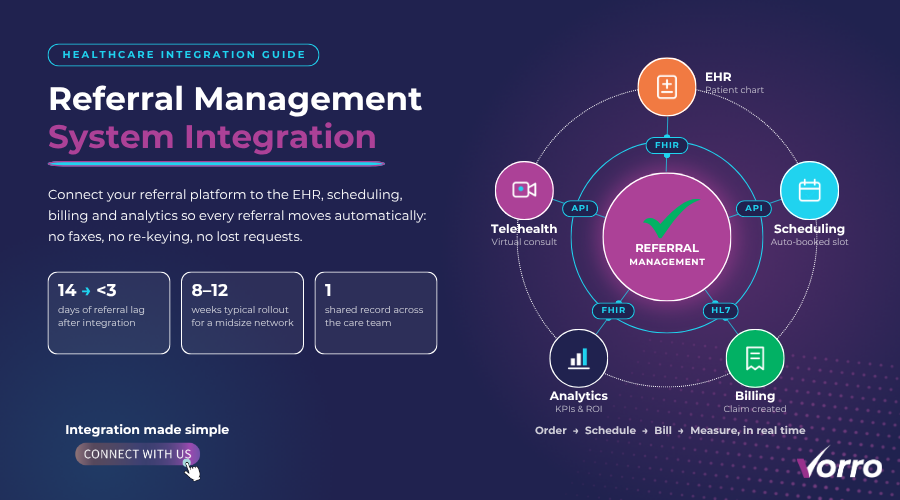
Take electronic referrals as an example. Without semantic interoperability, a referral note sent from one physician to another may be misinterpreted due to differences in terminology. With semantic interoperability, both systems interpret the data the same way, minimizing errors and ensuring patients receive the right care at the right time.
- Enabling Advanced Analytics
Poor-quality data undermines efforts to leverage advanced analytics for population health management, predictive modeling, and clinical decision-making. Semantic interoperability ensures that data from various sources is consistent and usable, paving the way for actionable insights.
According to HealthIT.gov, 86% of healthcare providers believe that better data interoperability would significantly enhance their ability to perform analytics and improve patient outcomes. With semantic interoperability, organizations can unlock the full potential of their data.
- Reducing Administrative Burden
Manual processes for reconciling and interpreting disparate data are time-consuming and prone to errors. By standardizing data and ensuring consistent interpretation, semantic interoperability automates these processes, freeing up valuable time for healthcare staff.
A 2020 AMA report found that administrative tasks consume 34% of a physician’s workday. Reducing this burden through semantic interoperability not only improves efficiency but also enhances job satisfaction for clinicians.
Implementing Semantic Interoperability: Key Steps
- Adopt Robust Healthcare Integration Solutions
Healthcare organizations must invest in platforms designed for seamless data integration. Tools like BridgeGate Health enable consistent and accurate data exchange, helping overcome interoperability challenges. Learn more about how BridgeGate can support your integration efforts through their healthcare integration solutions. - Leverage Data Mapping and Standardization Tools
Data mapping tools align disparate datasets to a common standard, ensuring consistency. These tools are especially useful when integrating legacy systems with modern EHR platforms. - Collaborate with Industry Partners
Collaboration is essential to achieve semantic interoperability. Organizations should work closely with vendors, industry groups, and regulatory bodies to adopt and implement the latest healthcare data standards. - Prioritize Staff Training
Training staff on the importance of data quality and the use of standardized terminology is critical. A well-trained workforce is essential for maintaining data consistency and minimizing errors.
The Future of Data Quality in Healthcare
The push for semantic interoperability is gaining momentum. By addressing data quality issues, it lays the foundation for a more connected and efficient healthcare system. As healthcare organizations continue to adopt interoperability standards, we’ll see improved patient outcomes, lower costs, and fewer inefficiencies.
To learn more about overcoming interoperability challenges, check out this insightful article on Bridging the Interoperability Gap in Healthcare.
By embracing semantic interoperability, healthcare organizations can turn their data into a powerful asset, driving better care for patients and creating a sustainable future for the industry.

Akshita is a Senior Content Writer and Marketer with over a decade of experience crafting narratives that convert, rank, and build lasting brand authority. She has worked across SaaS, FinTech, HealthTech, and Education spaces, delivering everything from HIPAA-compliant medical content to multilingual campaigns for the International Labour Organization, United Nations. Her content has reached audiences across the globe, and she has worked for Fortune 500 brands, global agencies, and startups alike. Fluent in English, Spanish, and German, Akshita brings a rare cross-cultural edge to brand communication. A literature graduate from Delhi University, she balances strategic thinking with a storyteller's instinct, but when she isn’t architecting content roadmaps, she channels her creativity into poetry and painting or dedicates her time to caring for stray animals - pursuits she credits for making her a more empathetic and perceptive communicator.