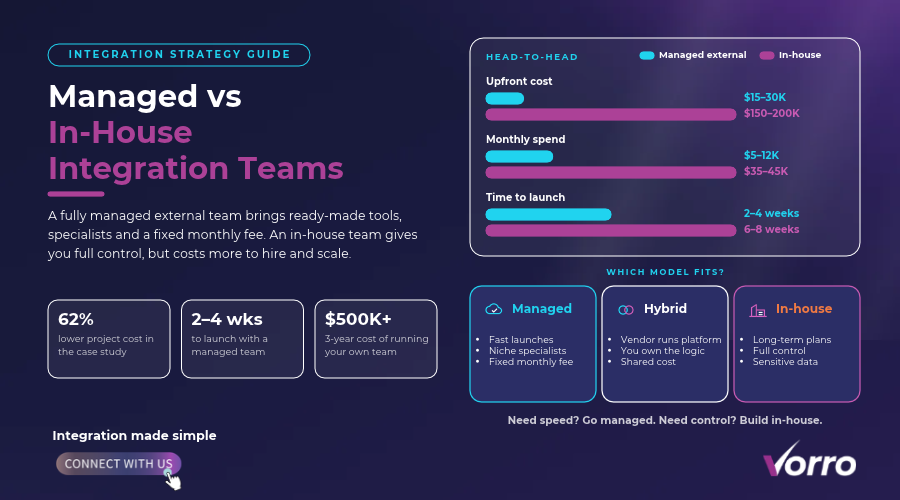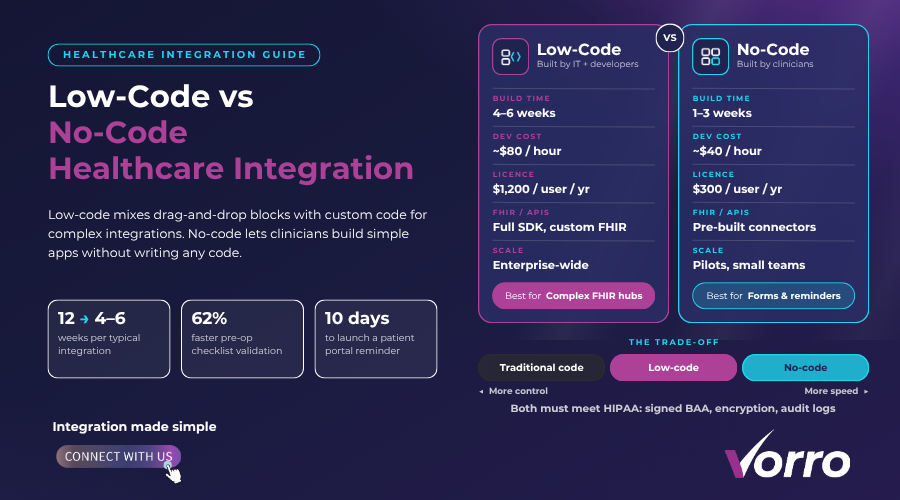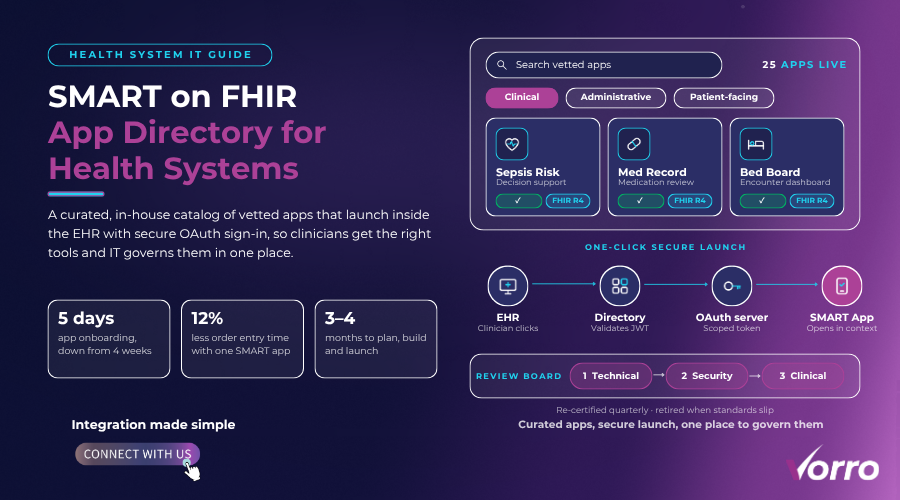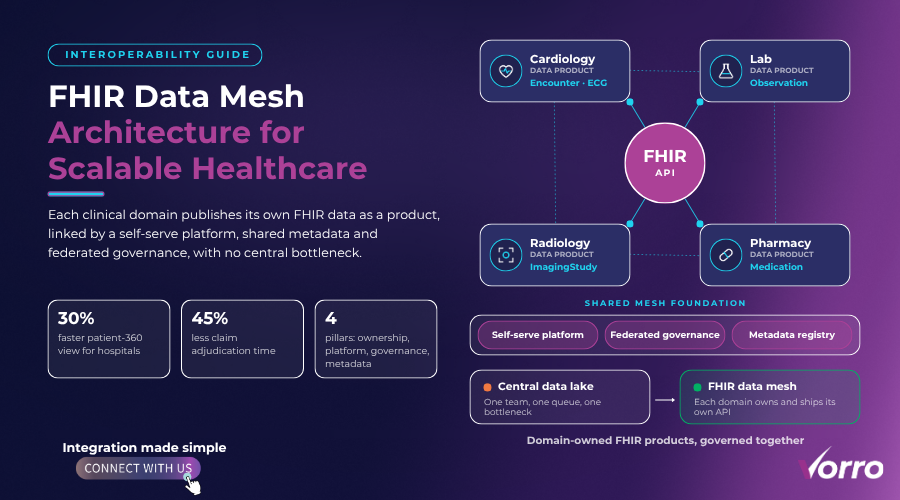

Traditional data integration methods are extremely time and labor-intensive. They occupy data engineering teams with mindless tasks that eat away from valuable resources that could be better devoted to strategy and business development. Automated data connectors make these tasks much easier. Here’s how.
Data is the lifeblood of today’s analytics teams. Their work provides a wealth of information that improves businesses’ decision-making processes. The collection of data from various sources into a single location where queries and transformations can be performed easily is what actually allows analytics teams to do their work. Obviously, this data must always be correct and up to date.
But the problem is that there are so many external data sources that companies big and small, all
find the task difficult to accomplish.
Earlier, data integration used to entail data engineers writing specialized code to link data APIs together. Unfortunately, creating and maintaining unique code connections and data pipelines is time-consuming. Additionally, data engineering teams needed to develop exclusive tracking infrastructure to keep tabs on the pipeline’s health and performance. There were too many tasks to keep up with, even for a team of data engineers. More than that, it slowed down the work of data scientists and analysts which is essential for strategizing.
Breaking the old-fashioned approach to data integration
For decades, data engineers and business intelligence developers have focused on consolidating data into trustworthy repositories. To do that, data engineers in the past either patched together their own scripts and task managers or, after the arrival of Microsoft’s SSIS and Apache’s Airflow, turned to data management platforms. However, these methods come with their own particular set of problems:
- Patched-together scripts require a lot of time and effort to maintain.
- Airflow and SSIS are typically used to connect to a limited number of data sources, typically databases.
- ETL-based data pipelines-which extract, transform, and load data into a data warehouse or other target system-are necessarily used in conjunction with these products, and they require data engineering to develop, maintain, and update them.
- Data engineering, in addition, is difficult and time-consuming. Plus, it also diverts attention away from the more important initiatives within the company and, hence, becomes the most significant stumbling block in a data integration process.
So, how can companies connect their data to their analytical and operational tiers while doing away with grunt work?
The answer lies in automated data connectors
Automated data connectors link to a wide range of data sources. Their main attraction is that they require nominal configuration, coding, and human involvement. There is no need for your team to develop any code or infrastructure to manage a large number of APIs, which saves on operational as well as integration time.
Further, automated data connectors eliminate the need for data engineers to continuously code the same integrations over and over again because they use ELT (extract-load-transform) instead of ETL, and ELTs come with several advantages. Because ELTs have a more streamlined process and lower project turnaround times, analysts are able to retrieve the data they need much more quickly. They also allow automated connectors to interface seamlessly with data transformation technologies, allowing your team to use software development best practices such as version control.
Utilizing Tools for Change
Automated data connectors allow data teams to connect with transformation tools like dbt, besides decreasing the amount of redundant code. After connecting your automated connectors to a certain database and installing dbt packages, it is easy to analyze the performance of your support team within a day with aggregated dashboards and tables. With all of these advantages, your team will be able to go from having no data and no centralized reporting system to developing insights within days.
Rapid Access to Data
Typical data integration is labor and time-intensive, diverting engineering resources from more valuable projects. Moreover, analysts and data scientists require quick and rapid access to their data if they are to become data-driven because when it comes to data quality, a sluggish ETL process can be just as harmful as false data. After all, companies need to make decisions based on data as and when it flows in, not after weeks or months.
Using commercially available data integration technologies with automatic data connectors for managing data can save significant engineering effort. This will free up resources for data engineers and software developers to focus on solving high-value challenges and have time for higher-value projects.
Request a demo for Vorro’s Bridgegate platform today.
Saying e-commerce is booming is an understatement. Nowadays, customers place online orders at
all hours of the day and demand real-time tracking updates on the goods and services they
purchase.
An API-enabled platform that focuses on customers and connects the retail journey across both
digital and physical channels are, therefore, essential to minimize deficiencies.
Only when that is accomplished can merchants turn their focus to innovation and exceptional
customer experiences both imperatives in the markets today.
Frequently Asked Questions
What are Automated Data Connectors?
Automated Data Connectors are pre-built integration components that link EHRs, APIs, and databases without custom coding. Vorro’s connectors enable real-time or scheduled data flows, reducing deployment time from weeks to days while minimizing manual errors in healthcare and enterprise environments.
How do Vorro’s connectors compare to Boomi or Mirth Connect?
Vorro prioritizes rapid, healthcare-specific deployment over the broad configurability of Boomi or Mirth Connect. Its pre-built connector logic reduces engineering overhead, making it ideal for teams needing fast time-to-value without dedicated integration specialists managing complex workflow builders.
Which standards do Vorro’s Automated Data Connectors support?
Vorro supports HL7 v2, HL7 FHIR R4, REST APIs, SOAP, JSON, XML, CSV, and SQL/NoSQL databases—covering the primary interoperability standards required for modern healthcare data integration and enterprise data pipeline automation.
Are Vorro’s data connectors HIPAA-compliant?
Yes. Vorro’s platform includes encrypted data transmission, role-based access controls, and audit logging—meeting HIPAA requirements for organizations handling protected health information (PHI) across integrated clinical and administrative systems.
What problems do Automated Data Connectors solve vs. traditional ETL?
Traditional ETL requires custom scripting per integration point, creating maintenance debt as systems evolve. Automated Data Connectors use standardized templates that self-adapt, cutting configuration effort, reducing break-fix cycles, and enabling non-engineers to manage data flows independently.