In today’s healthcare landscape, the integration of disparate data systems is a critical challenge that hospitals and healthcare providers face. Vorro’s healthcare integration software and EiPaaS solution offer a revolutionary approach to solving this problem, transforming patient care in numerous ways.
1. Centralizing Patient Data for Informed Decision Making
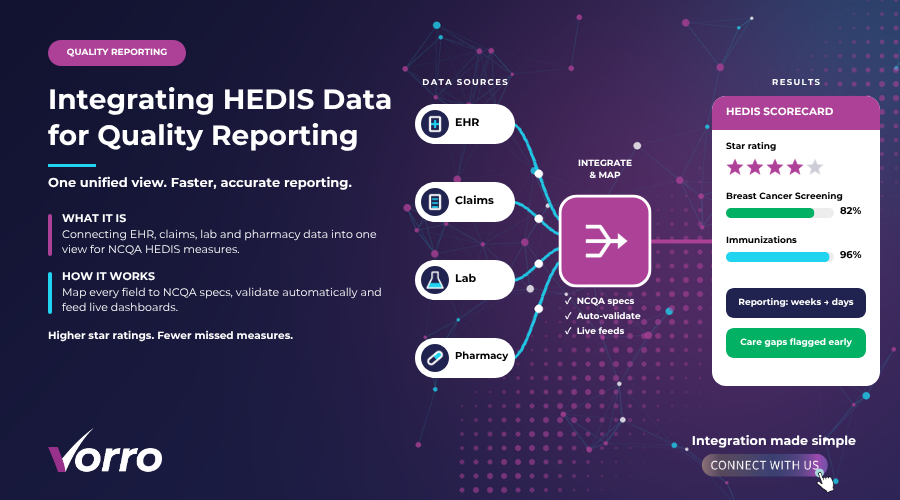
One of the most significant impacts of Vorro’s healthcare software integration is the ability to centralize patient data. This centralization creates a single source of truth, allowing healthcare professionals to access up-to-date patient information in real-time. The result is more informed decision-making and significantly improved patient outcomes.
2. Enhancing Security and Compliance
Vorro’s EiPaaS keeps patient data secure and compliant with HIPAA, GDPR, SOC, CCPA, and PCI regulations. This safeguards patient information, giving both healthcare providers and patients peace of mind and contributing to a safer healthcare environment.
3. Streamlining Workflows with Automation
The automation capabilities of Vorro’s healthcare software integration streamline workflows, reducing the time and effort spent on manual data entry. This efficiency allows healthcare staff to focus more on patient care rather than administrative tasks, enhancing the overall quality of care.
4. Improving Patient Engagement
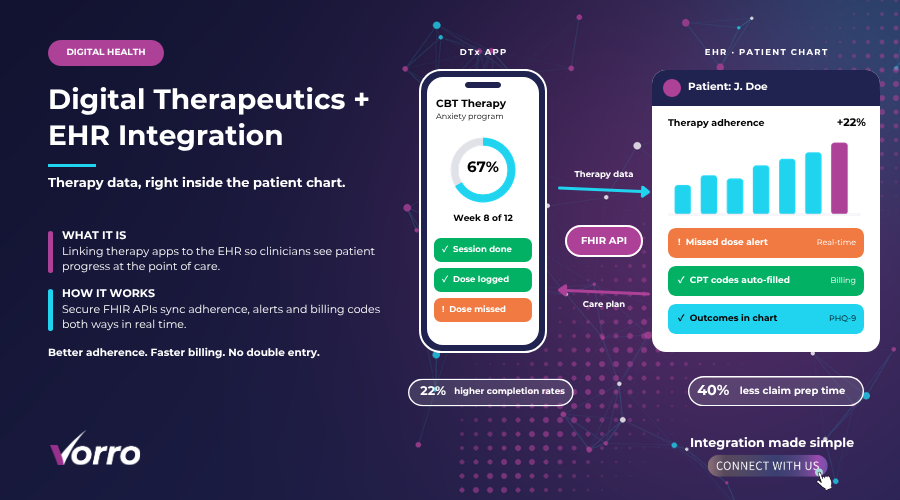
Vorro’s EiPaaS enables healthcare providers to offer patients access to their health records through secure portals. This access empowers patients to take an active role in their healthcare journey, improving patient engagement and satisfaction.
5. Scalability for Future Growth
As healthcare providers grow and expand their capabilities, Vorro’s healthcare integration software scales with them. This scalability ensures that providers can continue to offer high-quality care without being limited by their technology infrastructure.
6. Rapid Deployment and Any-to-Any Integration
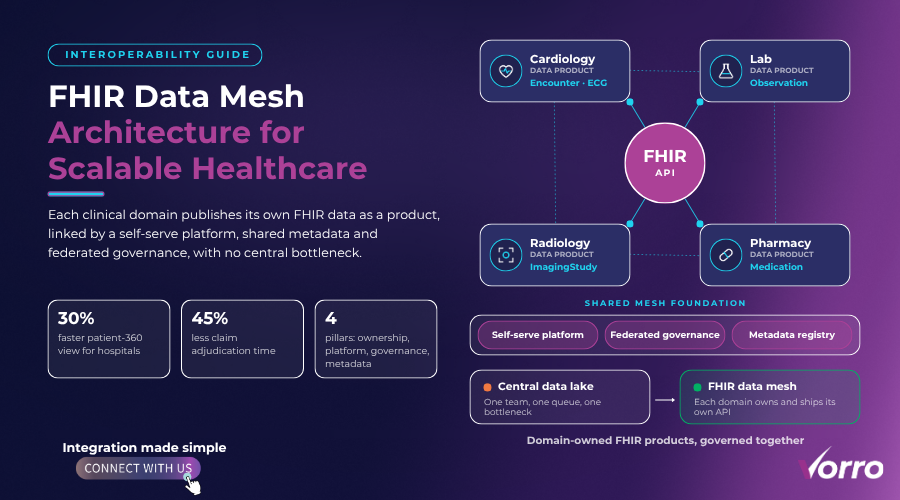
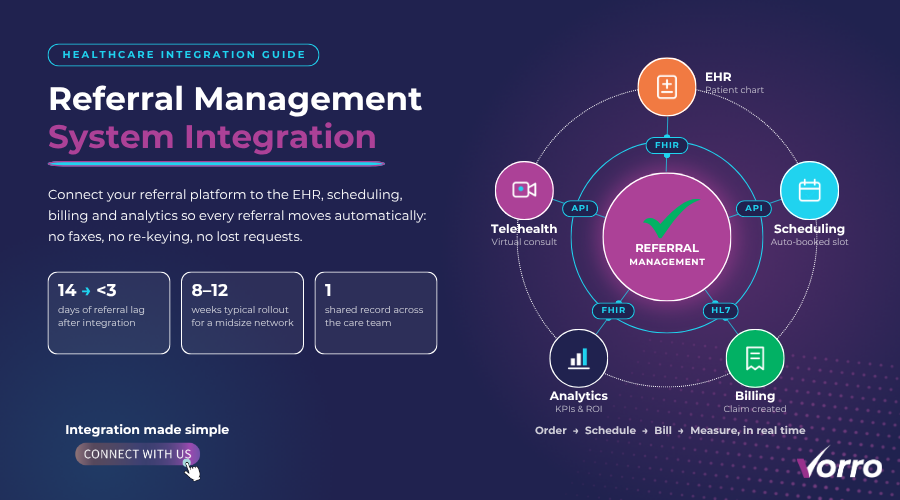
Vorro’s platform supports rapid deployment and any-to-any integration, handling various data types and protocols, including HL7, FHIR, EDI X12, and more. This flexibility allows healthcare providers to quickly adapt to new technologies and integrate new tools and applications seamlessly.
7. Empowering Healthcare Providers
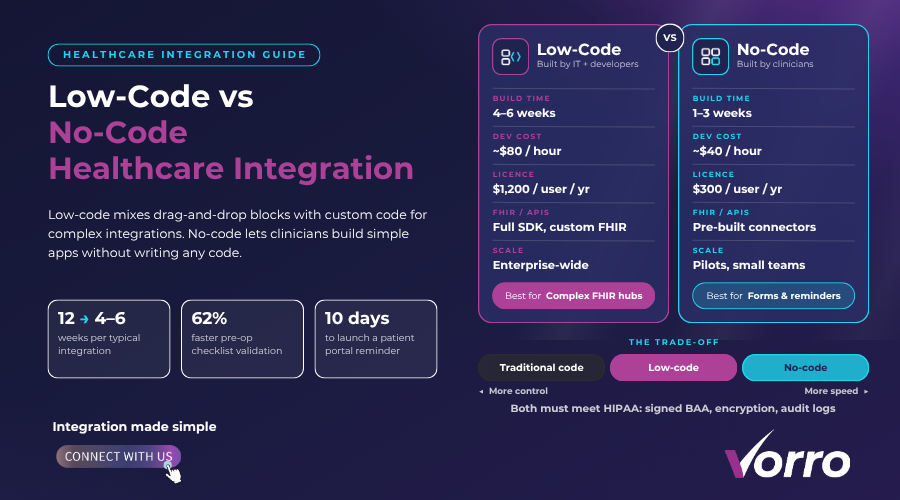
Vorro’s no-code approach and intuitive interface make it easy for healthcare staff to set up and manage integrations without needing specialized IT skills. This ease of use, combined with the platform’s comprehensive features, empowers healthcare providers to improve their services and patient care.
A Real-Life Success Story
Vorro excels in healthcare data management and patient care with its advanced integration software and EiPaaS solutions. By centralizing patient data, enhancing security and compliance, streamlining workflows, and boosting patient engagement, Vorro is transforming how a major US hospital chain approaches healthcare. This EiPaaS platform exemplifies the power of seamless data integration, offering a robust and scalable solution that addresses the challenges of siloed data. This integration not only facilitates informed decision-making but also ensures operational efficiency and a high level of data interoperability. It paves the way for a healthcare ecosystem that is both interconnected and intelligently responsive to patient needs.
To infer, Vorro’s healthcare integration software and EiPaaS are revolutionizing the way hospitals and healthcare providers manage patient data. With its comprehensive features and user-friendly platform, Vorro is empowering healthcare professionals to deliver better, more efficient, and more personalized care to their patients.
Interested in finding out how Vorro’s healthcare integration platform software can scale up your hospital ‘s tech health – We are here to help!